
What We Learned by Refusing to Pick a Lane
Reusability vs disposability is a tricky decision—at least it was in our case.
It has implications for the user experience, the product’s function, and of course, the finances behind the business. You can’t optimize every outcome at once. Somewhere along the line, something gets cut short.
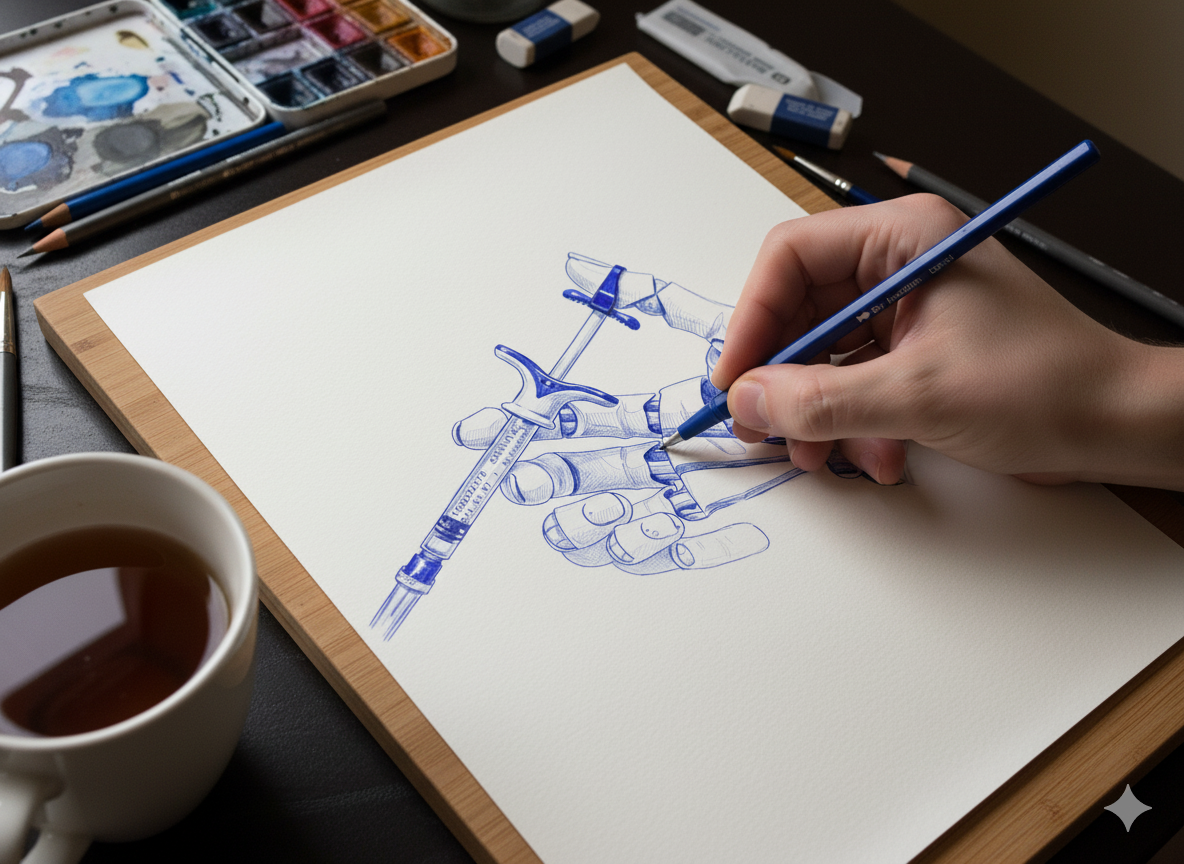
When Alyssa and I started working on what eventually became the Control Ring, we weren’t trying to develop a product at all. There was no market plan. No consultants. No packaging mockups. The goal was simple: make something that worked—for her.
She had been looking for a one-handed aspiration solution that didn’t feel clunky, overbuilt, or like a workaround. So I started prototyping. Researching. Testing. Tuning. Then repeating. Over and over. For months.
Eventually, we landed on something that she didn’t just tolerate—she loved.
And when she began sharing it with a few colleagues, it became clear: she wasn’t the only one.
One injector asked for a version that fit a different syringe. Then another. And another.
Before long, the same question kept popping up:
“Are you selling these?”
So, we launched the website.
Then Things Got Serious
Once it was more than just Alyssa and a few friends using it, we started having conversations about how to grow.
We met with consultants. Talked through business models. Explored materials, packaging, pricing strategies.
And a pattern emerged.
“Pick a lane,” they said.
“Is it disposable—or is it reusable?”
It was a fair question, in theory. That’s how most products are classified.
One path serves infection control, margin stacking, and predictable reorder cycles.
The other supports sustainability, value perception, and longevity.
But either way, the message was clear: choose.
We were even advised to redesign the Control Ring so it could only be used once.
That way we could label it cleanly as a single-use product, align with a predictable business model, and build a cleaner customer education path.
I tried. I really did.
But it didn’t sit right.
Making the Control Ring “disposable-only” would’ve meant compromising what made it work in the first place.
It would have introduced complexity to the user experience, weakened the design, and frankly, made the product worse.
Why We Said No
The Control Ring that got us here worked—as is.
It was durable enough to reuse across several syringes or patient sessions.
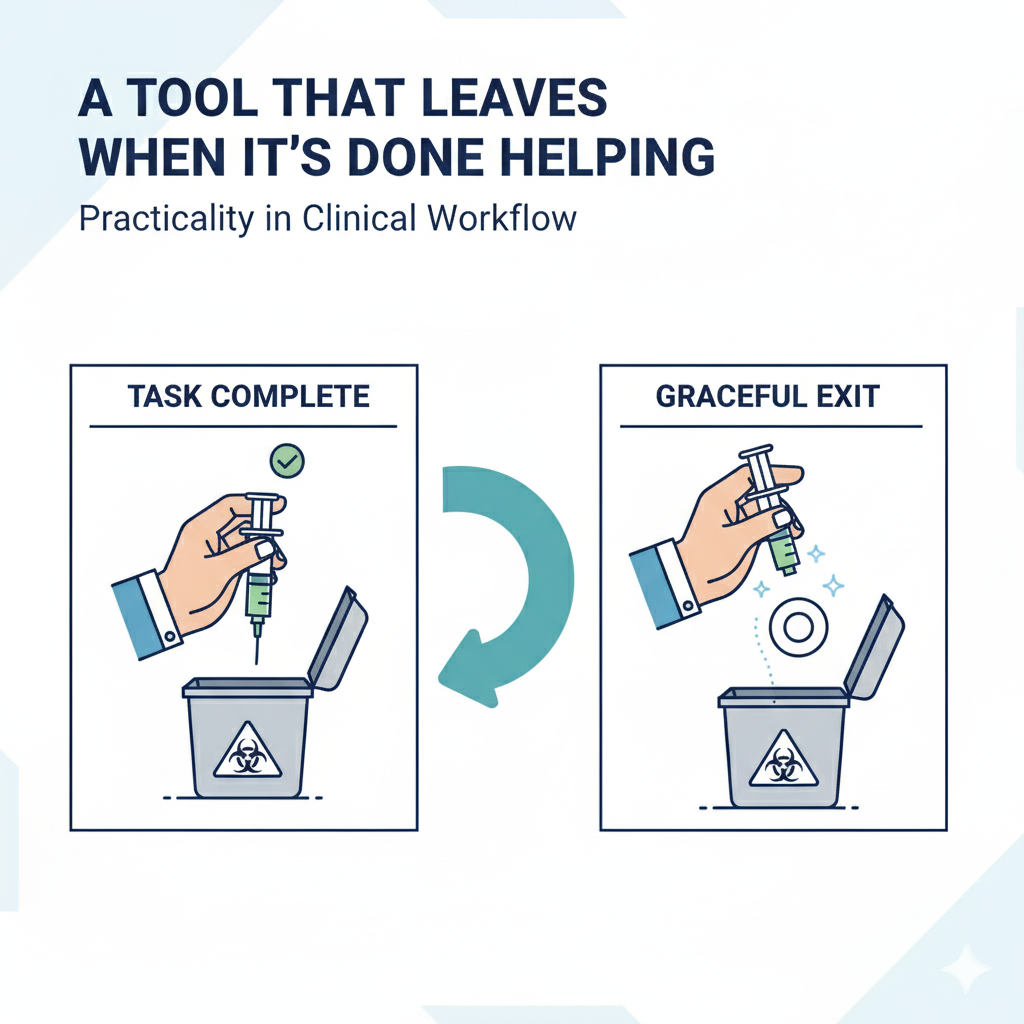
Simple enough to toss when it made sense.
To force it into a box—to make it either disposable or reusable—would have meant stripping away the very things that made it good.
So we didn’t.
We chose the third option: leave it in the grey.
Let it be.
The Control Ring wasn’t designed to dictate how you work.
We provide guidelines and best practices, of course—
but you get to decide what makes sense in your practice.
Sometimes that’s one and done.
Sometimes it’s ten.
It’s not about permanence.
It’s about presence.
No mandated ritual.
No artificial constraints.
Choose your own adventure.
Just a tool that shows up when needed—
and leaves when it’s done helping.
That’s the Kind of Tool We Set Out to Make
Not reusable for the foreseeable future. Not disposable and immediately relegated to the past.
Just right for now, built for whatever the present moment requires.
It may not fit cleanly on a spec sheet.
It may not align with a tidy business model.
But it fits the moment—
and that’s our cornerstone.

Share:
Like Your Favorite Pen.
"I Don't Accept That"